
THE DRAUGHTSMEN
Celebrating the precision and expressive power of line, this trail showcases artists who elevate drawing to an art form. Expect meticulous detail, elegant mark-making, and a mastery of tone and texture.
Booth 4
MICHAELA WHEATER | PELHAMEN II, 2025
Michaela Wheater’s printmaking lends heavily on drawing. She often works on a large scale limiting herself to just a HB pencil and an eraser on cartridge paper. She likes to solve problems within self imposed limitations. Tonal values and form arrive from amassing a large number of lines that work and re work a surface in an attempt to address issues within the drawing. Errors are softened, erased and built upon and a layered surface is the result of honestly showing her ‘working out’.
‘Pelhamen II’ contains a hard ground drawing as its primary etching plate. Hard ground etching feels sympathetic to the artists approach. This drawing made with an etching needle emerged through trial and error. These etched drawings are never redrafted from previous studies and as such feel honest in the moment of making, as an outcome of a creative endeavour.
Booth 4
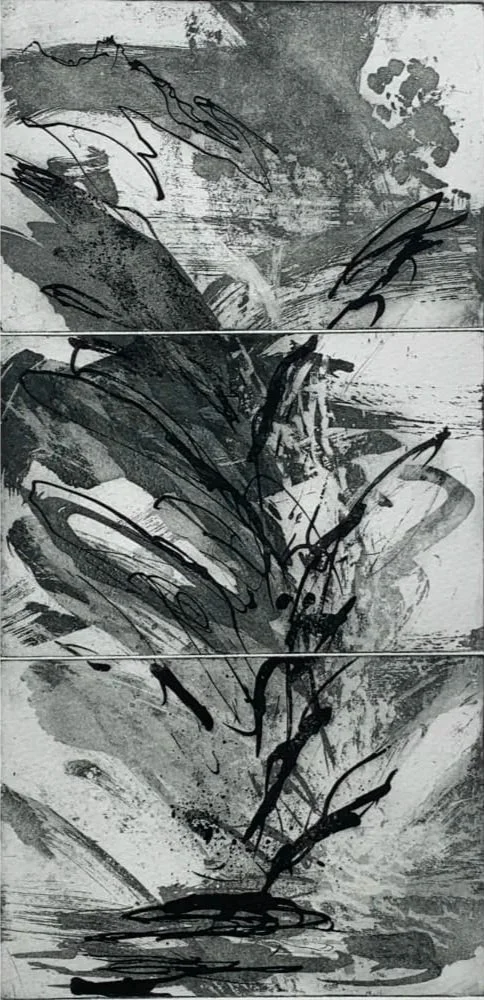
GERALDINE VAN HEEMSTRA | CUILLIN WATERFALL (TRIPTYCH), 2024
Drawn to working in strong wind and weather, Geraldine van Heemstra connects deeply with the changing landscape through walking and full immersion in the Scottish Hills and along the coastline. She records the surrounding elements in sketchbooks, capturing the dynamism of the environment. These drawings and watercolours then inform her studio etchings, where the elements and landscape flow through her onto paper, transforming the intangible into the tangible. Her marks, developed in collaboration with nature, are expressed predominantly—but not exclusively—in painting and printmaking. An example is ‘Cuillin Waterfall,’ a sugar lift aquatint featuring a large range of tonal values that echo the strong wind and weather encountered on her walks.
Booth 6
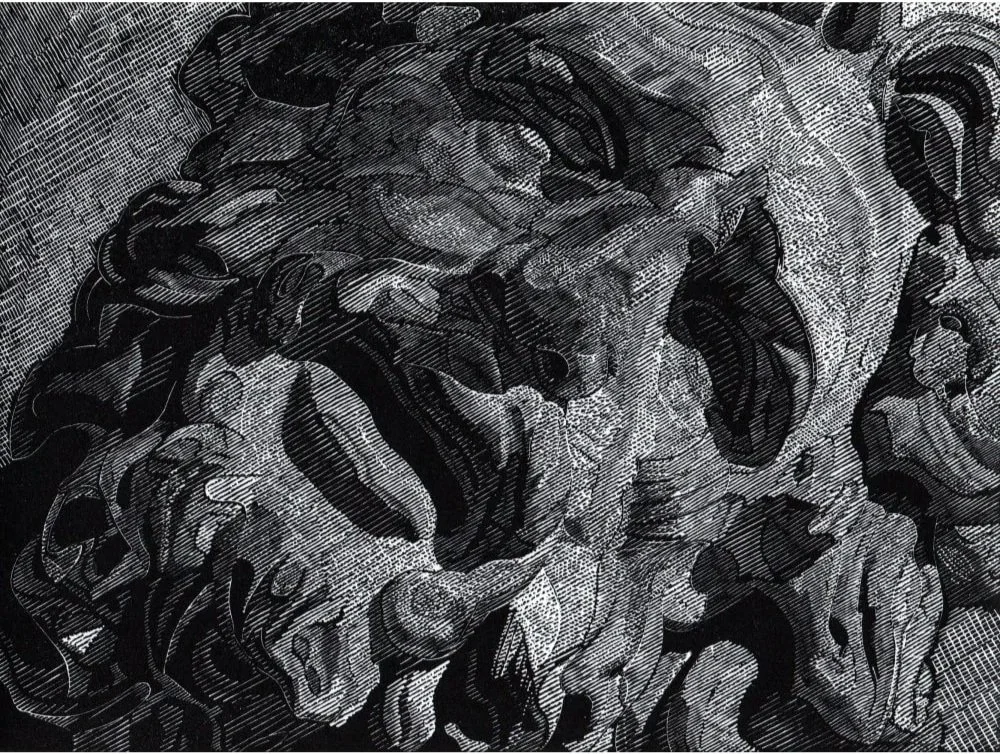
NICHOLAS JAGGER | THREE STUDIES FROM THE LAOCOÖN, 2024
Nicholas Jagger explores the Vanitas theme in drawing, painting, printmaking and three-dimensional work. He is a member of the Royal Society of Painter-Printmakers and also the Society of Wood Engravers, editing their journal 'Multiples'. He exhibits regularly in national and international print exhibitions with occasional appearances with Leeds Fine Artists. Most of his work features the human figure, more particularly the head, sometimes using self-portraiture. His favoured processes are wood engraving, drypoint and etching. Recent work has seen a combination of blocks to create a single work, and an application of print to make three-dmensional work.
Booth 14
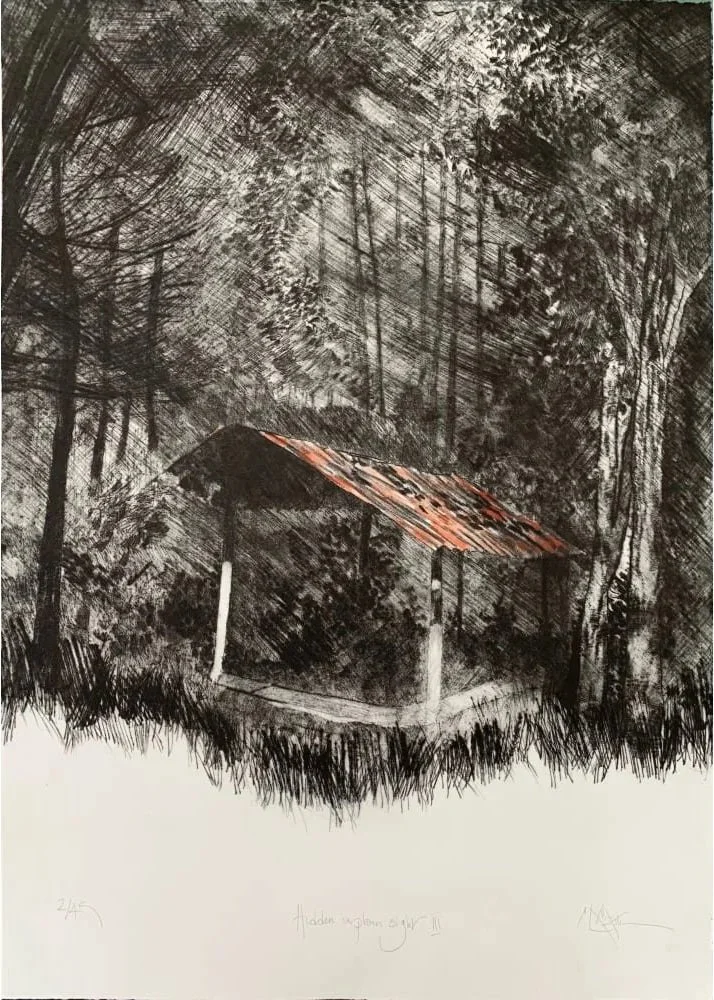
MARIE-LOUISE MARTIN | HIDDEN IN PLAIN SIGHT III, 2023
Possibly, as a result of the pandemic, Martin's awareness of her surroundings and immediate environment, has altered her experiences of her many walks. She has been particularly fascinated when the woods reveal something of their secrets. Overgrown tracks there might to lead to abandoned places: homesteads; gardens; ruined barns; steps that apparently to go nowhere; and even ordinary things, such as chairs. Their abandonment poses many questions: why did people just up and go: why were they leaving everyday objects behind like farm machinery, even personal belongings – photographs and letters; where are those people now; do they know what they have left behind? Their reasons for leaving are long forgotten. Sometimes, the destination or purpose of these paths has vanished – and vanished completely out of time. Now, she invites the viewer to join with her in imagining their histories.
Booth 6
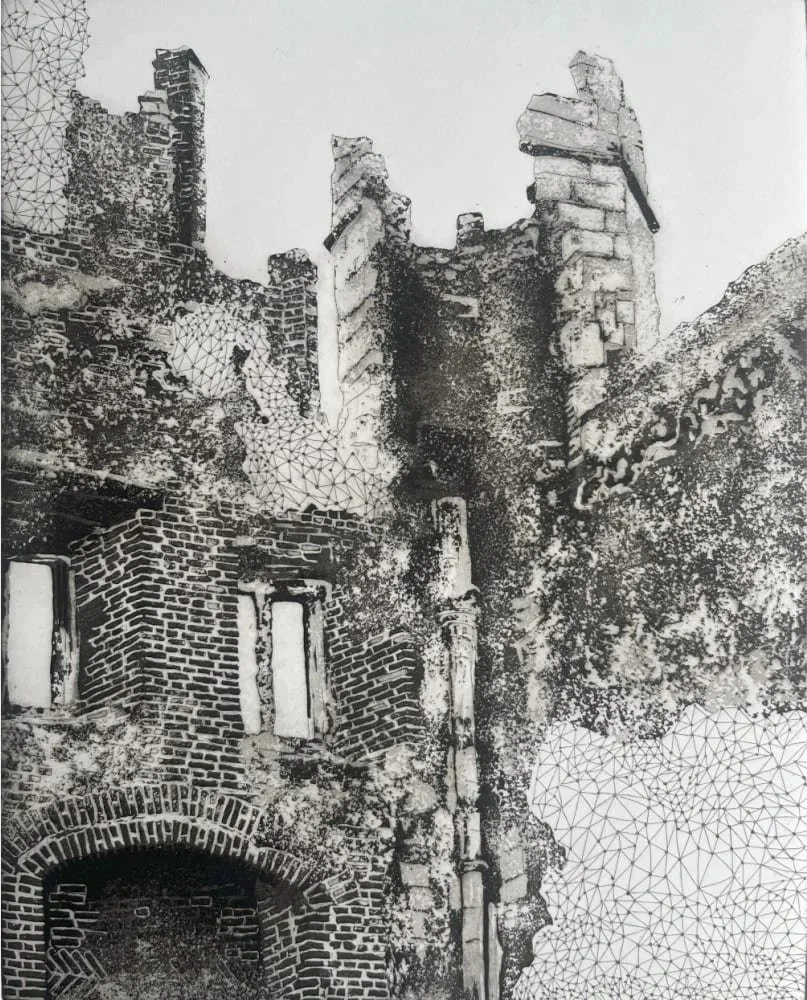
ANNA MARRIS | CAPTURING THE TURRET, 2024
Anna Marris, an artist and researcher based in Portsmouth and London, explores art, science, and ecology through printmaking. Her work depicts a turret of the 803-year-old Titchfield Abbey in Hampshire, featuring a mesh structure from 3D scan data. By blending drawings from the scans with the ruin's image, she evokes the experience of observing a centuries-old building and its fragile decay.
The artwork was created layer by layer, starting with hand-drawn details etched on zinc. Marris captured the abbey’s brickwork and mesh from scan data with fine etching. She then applied aquatint, using paint brushes, sponges, and cardboard to build tones and textures playfully. Marris reflected on whether the digital 3D scan might outlast the physical abbey, becoming the only way to experience the ruin.
Booth 22
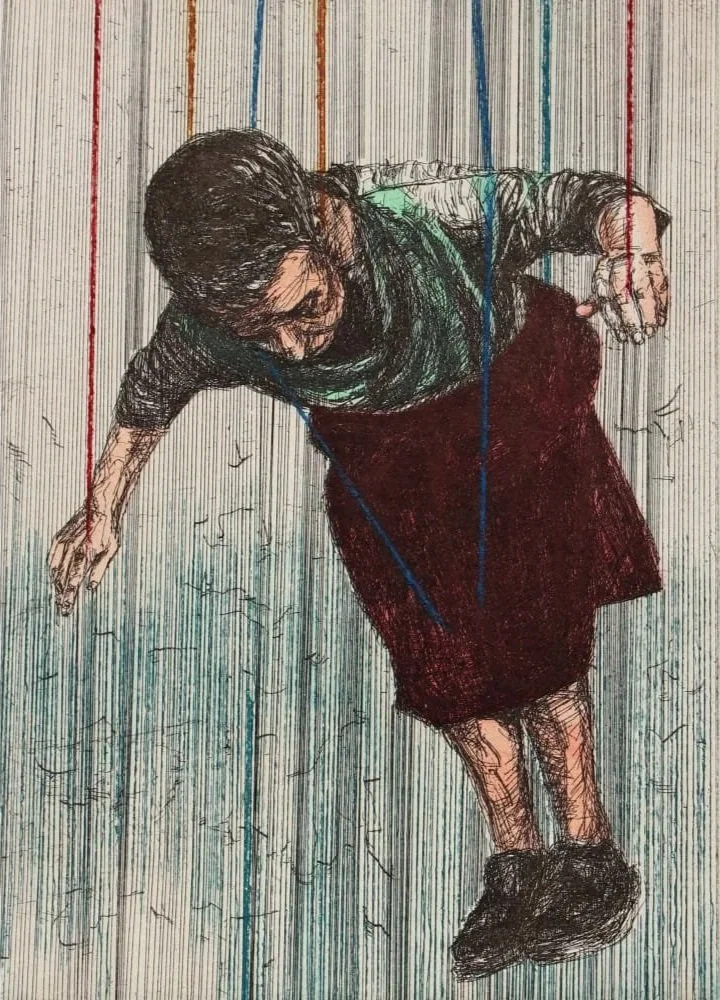
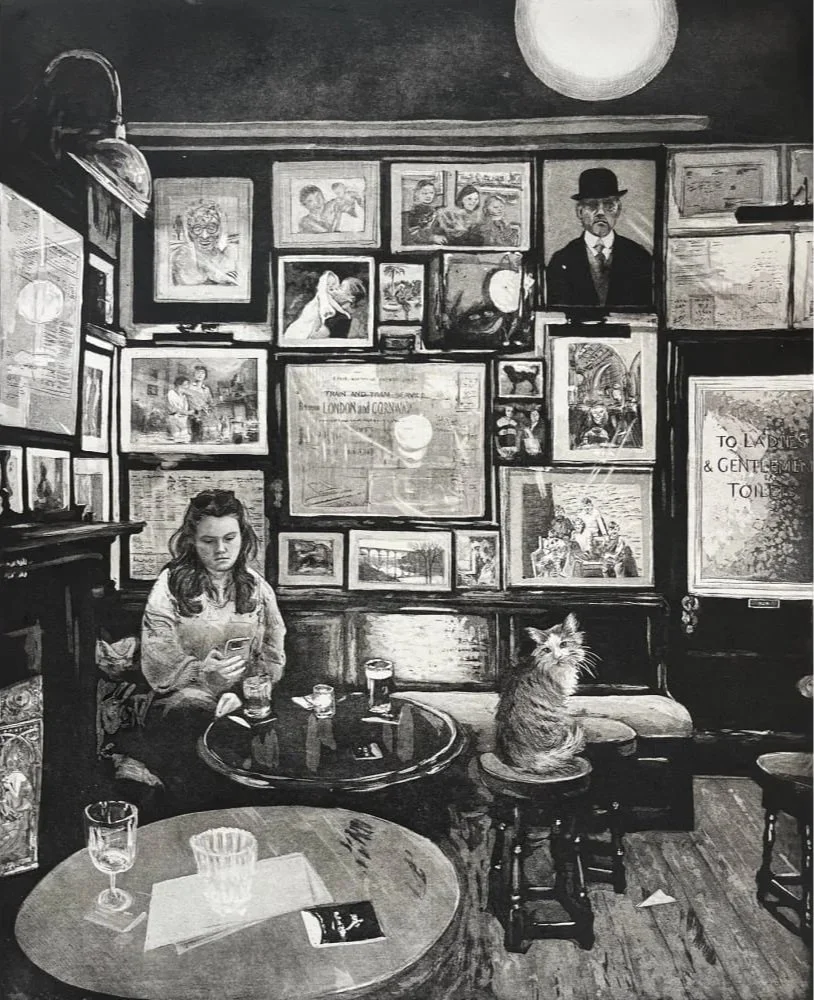
LEY ROBERTS |THE ANCESTOR, 2025
Drawing has always been at the heart of Ley’s work. When printmaking she draws directly into a wax resist on a zinc plate thus revealing the raw metal for the acid to etch the ephemeral lines into permanence, adding tones with aquatint she then completes her images with further drawing using a burnisher and drypoint techniques.
Ley's current immersion in portraiture is mostly about her family and close friends, it's a personal body of work and this is evident in The Ancestor. The random pictures on the wall in her daughter's Local have been re-imagined to surround the subject with the very essence of her history and being, enveloping the blissfully oblivious young woman in a mosaic of the people from whom she has descended and in who’s hands she has been cared for.
Booth 33
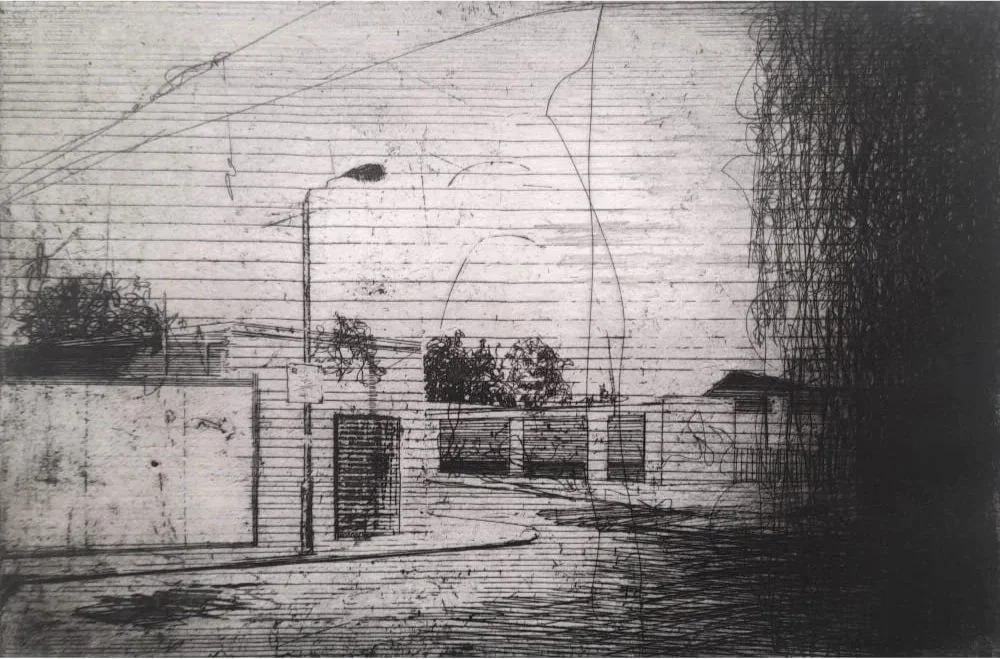
ROSEY PRINCE | BERMONDSEY LOCK UP, 2022
Rosey Prince’s work looks at the places where urban and rural meet and the effects and consequences of the human impact on this landscape.
This print depicts a back street in Bermondsey, featuring old lock-up units adjacent to what was once a patch of wasteland. Bermondsey is an area undergoing significant regeneration, characterized by a juxtaposition of poverty and growing affluence. The lock-ups carry layered meanings—raising questions about their users, contents, and purpose. While the wasteland has since been developed, the lock-ups remain. The artwork combines the rigid use of etched lines to convey tonal variation and to delineate architectural shapes with a more organic drypoint technique and unique wiping, capturing the random vegetation encroaching upon the urban environment.
Booth 33
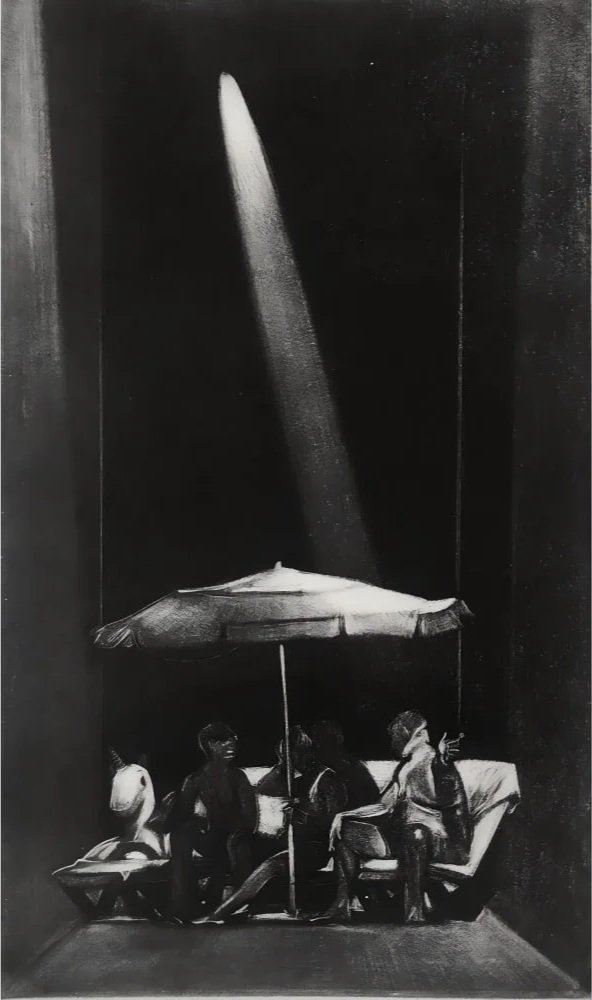
ANDREY NOVIKOV | ALL INCLUSIVE, 2025
Andrey Novikov’s printmaking practice explores the intersection of personal perception and cultural landscape, employing traditional intaglio techniques as a means of orientation and reflection within a new social environment. His work All Inclusive addresses themes of social isolation. Novikov conceptualizes the piece around the idea of relaxed, vacationing people enclosed within a confined space — a box. The box serves as a symbol of avoidance and voluntary self-isolation. A bright ray of light attempts to penetrate but is deflected by an additional obstacle — an umbrella. Through this imagery, the characters have taken every possible measure to prevent reality from intruding upon their calm, comfortable world.
Booth 33
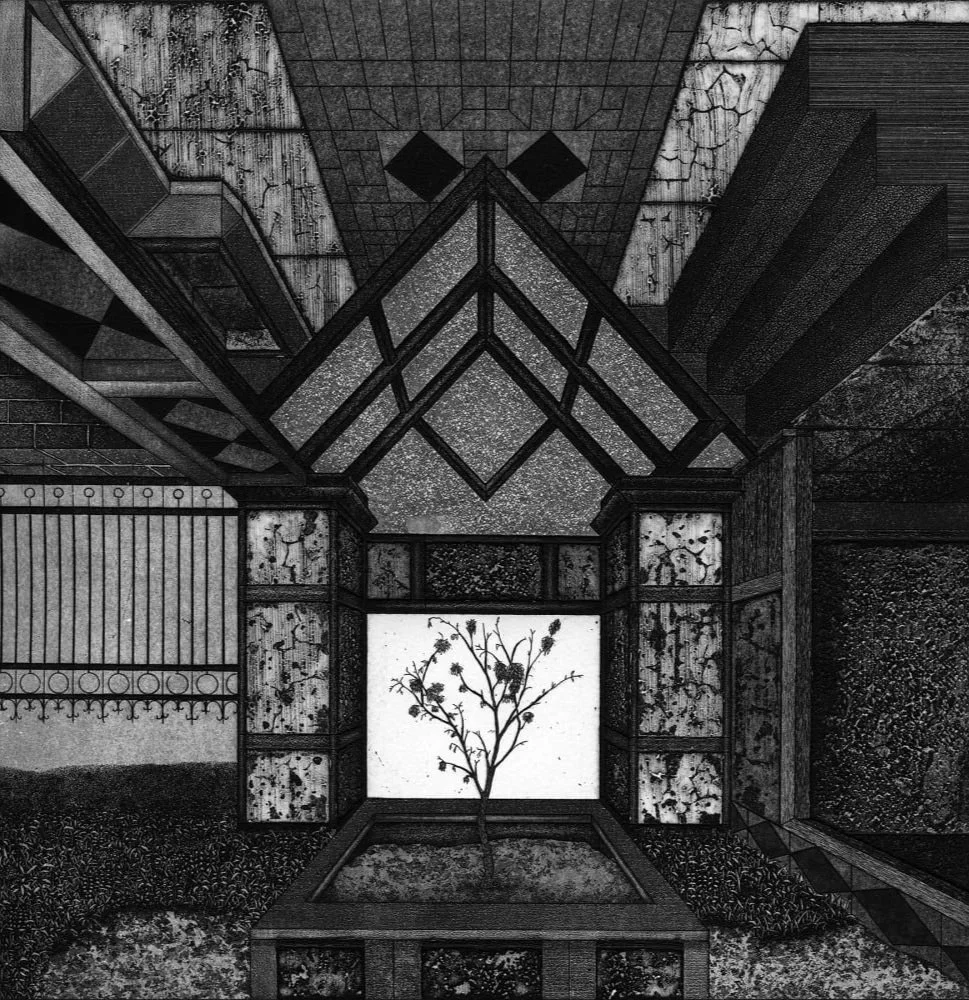
BRANDON WILLIAMS | QUESTIONABLE PLACE, 2018
Brandon Williams’ practice is grounded in academic drawing and traditional/pure printmaking, with a strong emphasis on linear perspective and intaglio processes. Each piece is meticulously hand drawn and etched, employing a wide range of materials and methods to capture tones and imply textures, including hard ground, soft ground, white/soap ground, gum arabic cracked ground, sugar lift, xerox toner wash, open bite, spray paint aquatint, rosin dusting aquatint, scraping and burnishing, and drypoint. His copperplates typically go through 10 to 15 states and may take anywhere from one month to a full year to complete, depending on scale, complexity, and the inevitable technical setbacks along the way. Conceptually, the imagery touches on the idea of the built environment ironically trying to reclaim or reintroduce natural elements it once displaced.
Booth 36
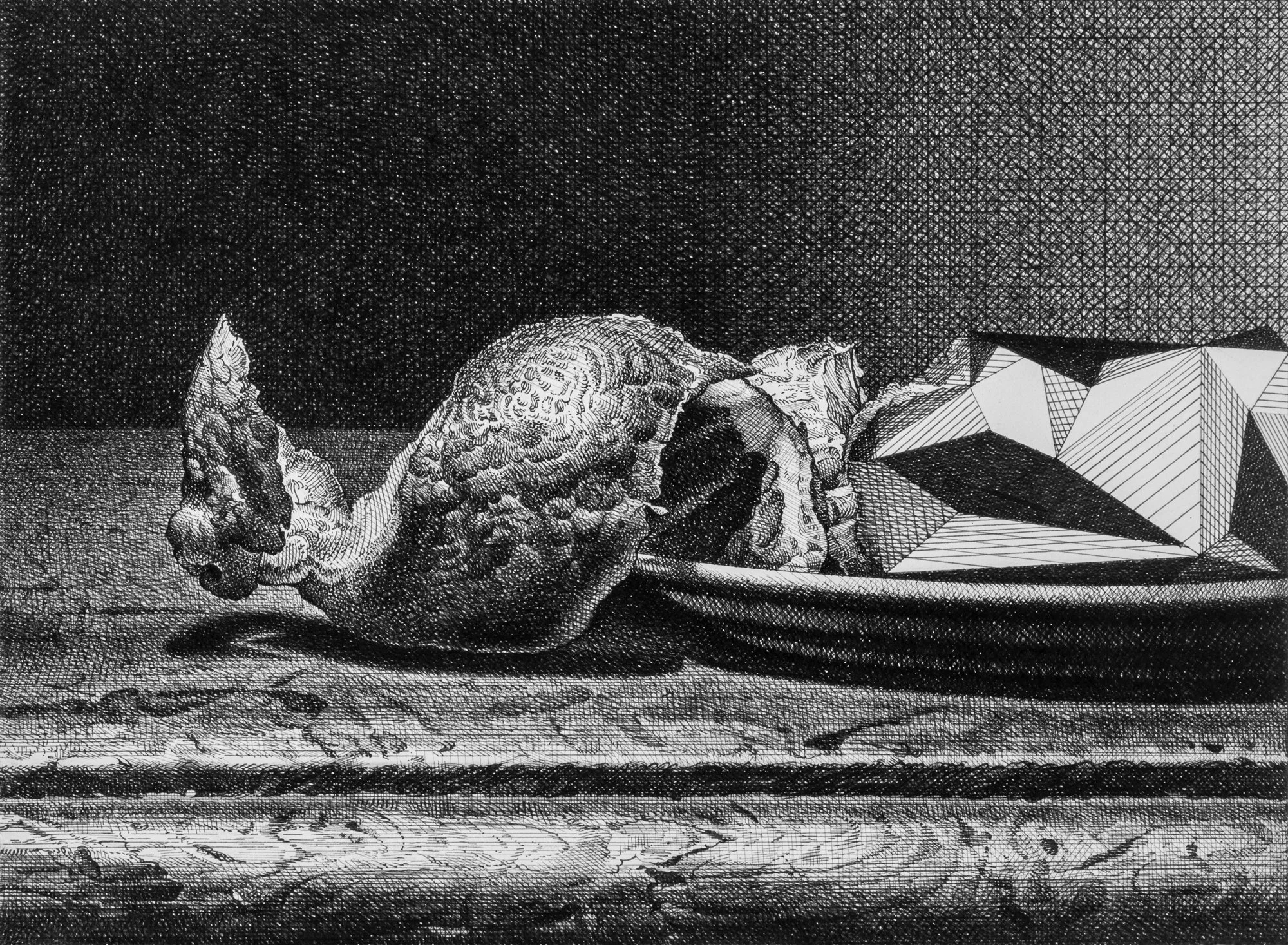
Hynek Martinec | The Cyberlemon, 2025
Hynek Martinec reimagines one of art history’s most familiar motifs, the lemon, through the lens of the digital age. Developed for his 2025 solo exhibition Cyberlemon at the DOX Centre in Prague, the print transforms organic fruit into a precise geometric form, part object and part symbol.
Executed with exceptional attention to craft, the work draws on the visual language of 19th-century etching while reflecting a distinctly contemporary sensibility. Historically, lemons were prized by Dutch and Flemish collectors as symbols of wealth and refinement. Here, Martinec renews that sense of rarity, turning a common fruit into a “golden apple” for the technological era.