
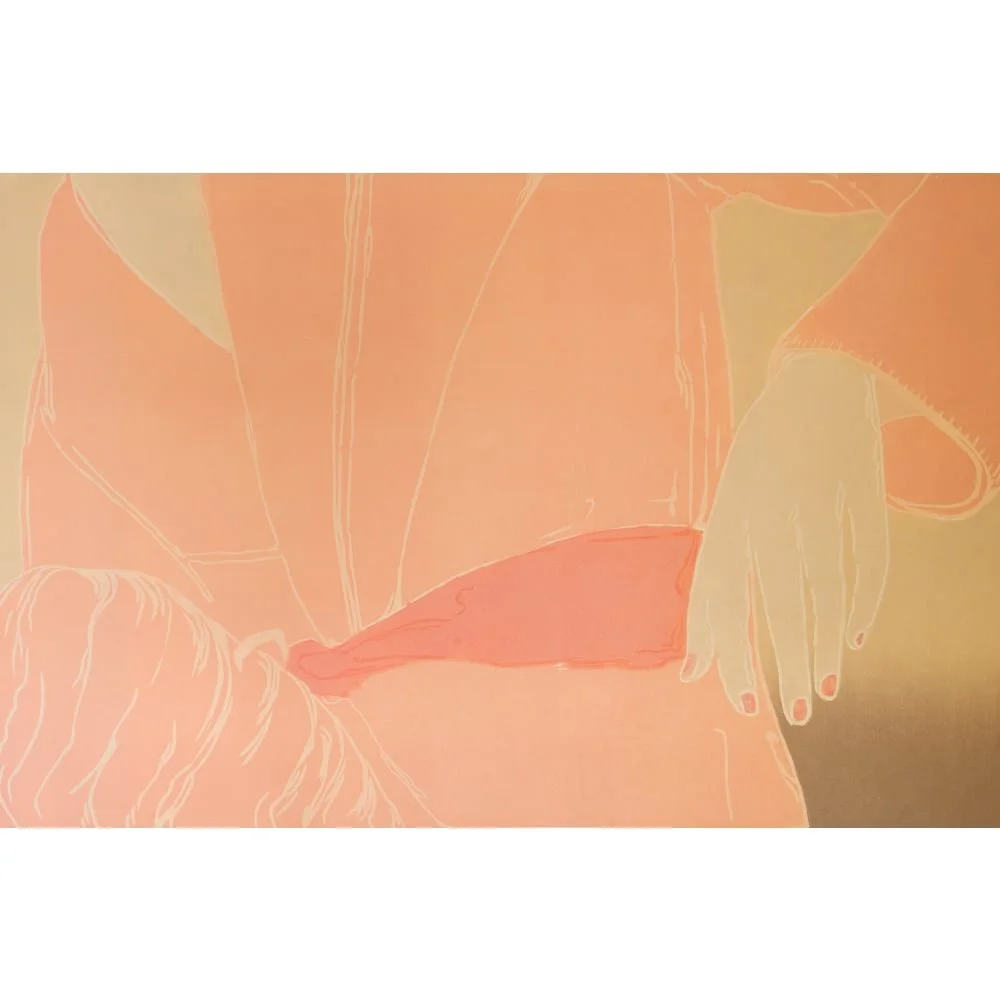
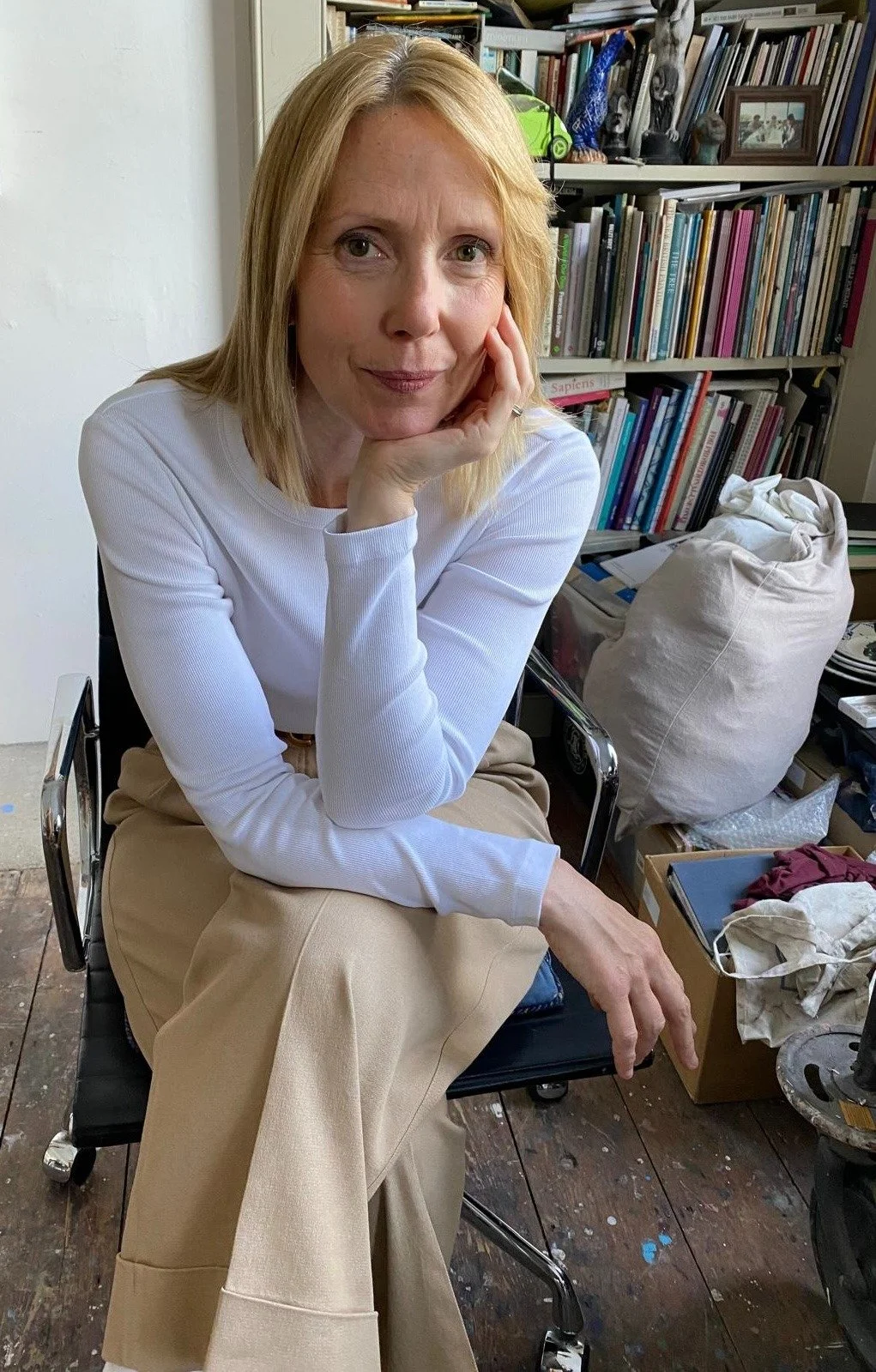
Zelga/s practice spans drawing, painting, and printmaking. At its core, it explores emotional nuance through layered imagery—peeling back the surface of the everyday to reveal unease, tenderness, and quiet strength. Figures exist in a liminal space between stillness and becoming, between care and rebellion. They are poetic vessels of strength, resilience, and vulnerability. Zelga is drawn to the emotional resonance of line and form, using figures as conduits for lived experience. Rooted in an archival mindset with a reverence for drawing, her work seeks a balance between stillness and fluidity. There is often a subtle sense of resistance—a quiet liberation running through the work. Rosalind Galt’s Pretty: Film and the Decorative Image has influenced my thinking deeply. She challenges how the critical elite devalues colour and decoration as mere prettiness—dismissed for being feminine or foreign. It is fair to say that Zelga is not interested in upholding those outdated hierarchies. Her practice embraces beauty and emotion as powerful tools of expression. Ultimately, her work examines emotion and resilience. The figures and scenes depicted are armatures—structures for feeling. They are vessels for what she has lived and what connects her to others. Through the language of paint, print and drawing she attempts to articulate the unspoken: the poetic, the psychological, the deeply human.
Zelga/s practice spans drawing, painting, and printmaking. At its core, it explores emotional nuance through layered imagery—peeling back the surface of the everyday to reveal unease, tenderness, and quiet strength. Figures exist in a liminal space between stillness and becoming, between care and rebellion. They are poetic vessels of strength, resilience, and vulnerability. Zelga is drawn to the emotional resonance of line and form, using figures as conduits for lived experience. Rooted in an archival mindset with a reverence for drawing, her work seeks a balance between stillness and fluidity. There is often a subtle sense of resistance—a quiet liberation running through the work. Rosalind Galt’s Pretty: Film and the Decorative Image has influenced my thinking deeply. She challenges how the critical elite devalues colour and decoration as mere prettiness—dismissed for being feminine or foreign. It is fair to say that Zelga is not interested in upholding those outdated hierarchies. Her practice embraces beauty and emotion as powerful tools of expression. Ultimately, her work examines emotion and resilience. The figures and scenes depicted are armatures—structures for feeling. They are vessels for what she has lived and what connects her to others. Through the language of paint, print and drawing she attempts to articulate the unspoken: the poetic, the psychological, the deeply human.