
Sara Clark is a UK based artist whose multidisciplinary practice links together elements of observation, drawing and printmaking underpinned by an experimental background in sculpture. Site-responsive interactions with post-industrial locations have been the starting point for recent works examining the role of light within a confined space.
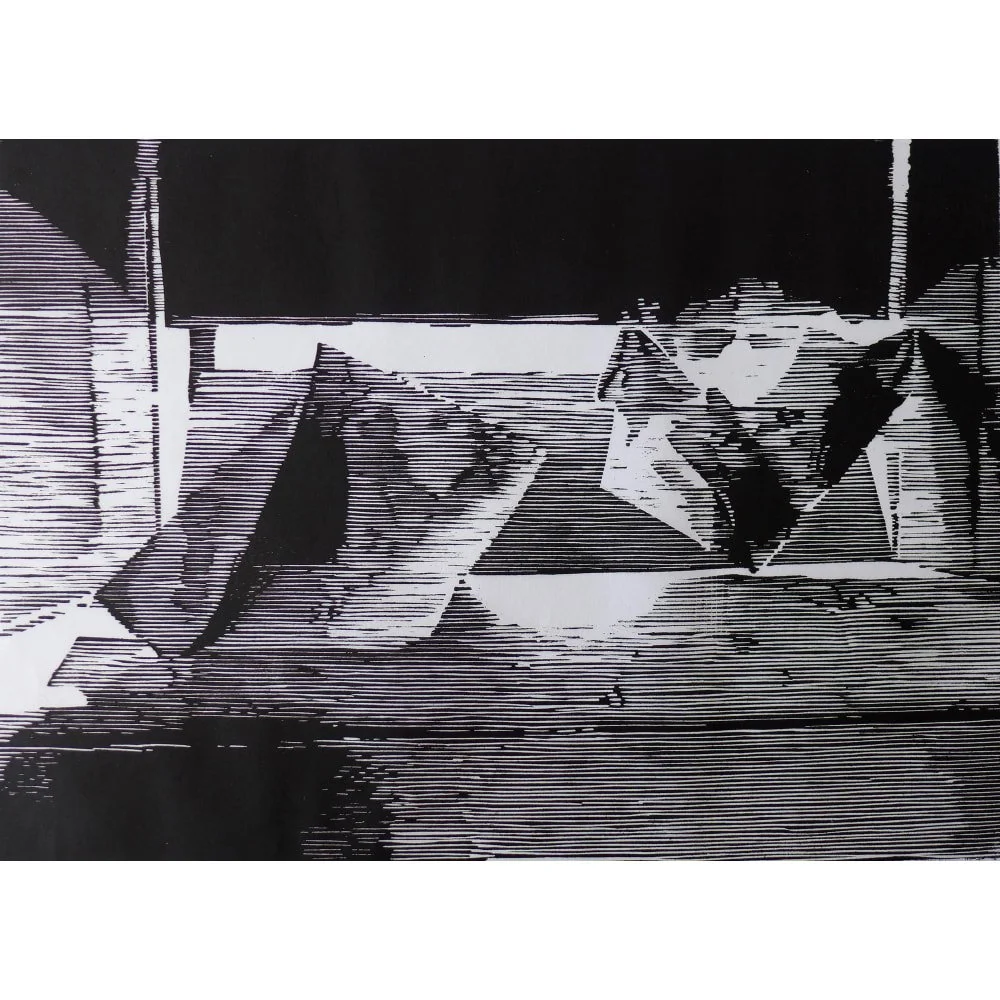
Resting Forms is part of an ongoing series of works from a yearlong investigation of derelict sites, tracing themes of loss, impermanence, and identity. What began as direct, physical engagement with these locations evolved into a studio-based practice, reworking found materials, drawings, and photographs to re-enter those spaces through memory and process.
In the studio, these materials were folded, cut, and stitched, held together by chance and tension. Over time, they shifted, collapsed, and rebalanced, mirroring the fragile structures of the places they referenced.
At the core of this investigation is the search for a point of convergence, where observation and recalled experience meet. This intersection becomes a site in itself: an 'other' place that resists fixed definition, shaped by both physical encounter and internal perception.
Sara Clark is a UK based artist whose multidisciplinary practice links together elements of observation, drawing and printmaking underpinned by an experimental background in sculpture. Site-responsive interactions with post-industrial locations have been the starting point for recent works examining the role of light within a confined space.
Resting Forms is part of an ongoing series of works from a yearlong investigation of derelict sites, tracing themes of loss, impermanence, and identity. What began as direct, physical engagement with these locations evolved into a studio-based practice, reworking found materials, drawings, and photographs to re-enter those spaces through memory and process.
In the studio, these materials were folded, cut, and stitched, held together by chance and tension. Over time, they shifted, collapsed, and rebalanced, mirroring the fragile structures of the places they referenced.
At the core of this investigation is the search for a point of convergence, where observation and recalled experience meet. This intersection becomes a site in itself: an 'other' place that resists fixed definition, shaped by both physical encounter and internal perception.