
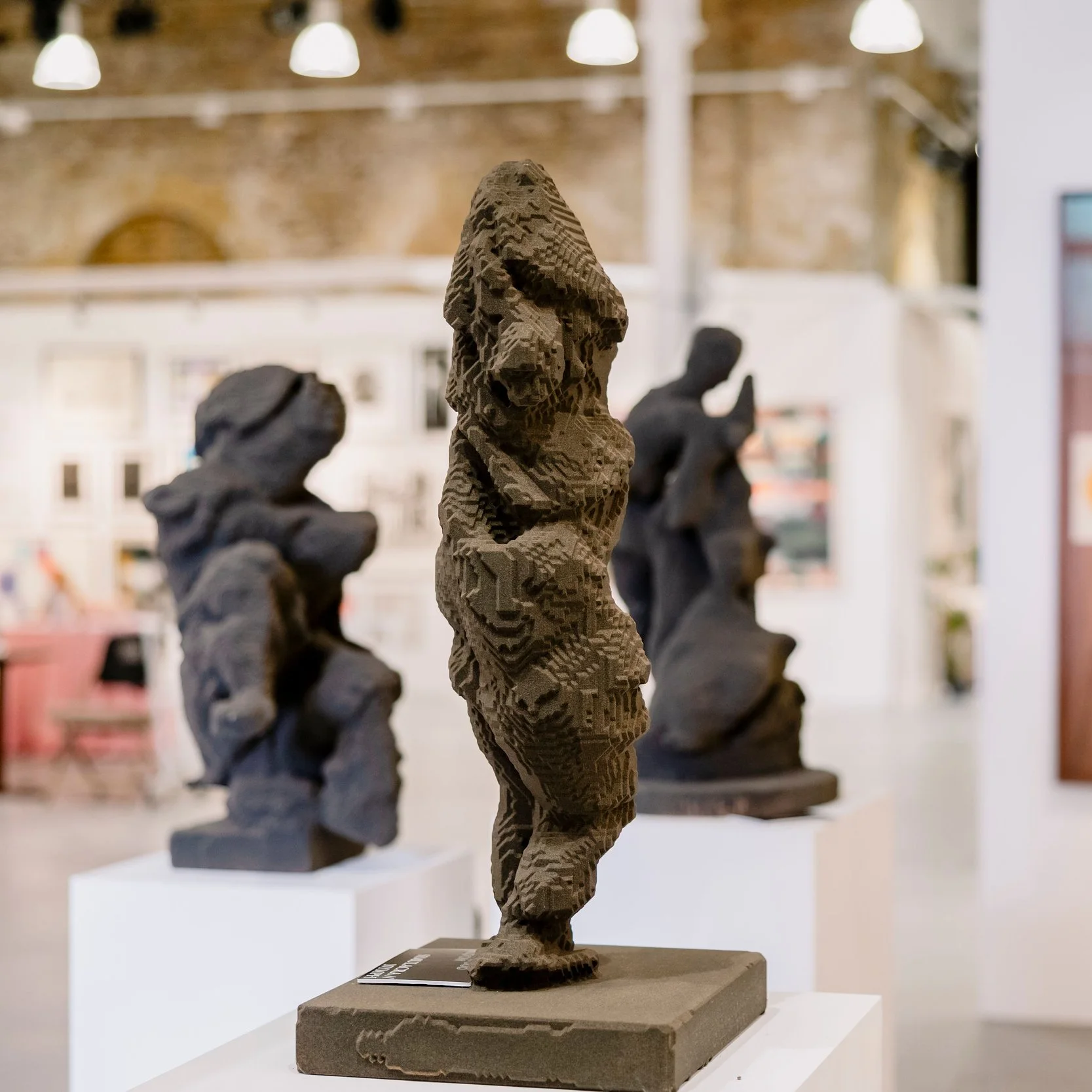
3d Print
3D printing is a process in which a three-dimensional form is created layer by layer from digital data. The artist develops a digital model, which is then translated by a machine into a physical object using materials such as resin, plastic, metal, or composite substances. Unlike traditional printmaking, the matrix exists as a digital file rather than a carved or etched surface.
The printer deposits or solidifies material in successive layers, gradually building the form from the base upward. The resolution of these layers, along with the chosen material, influences the surface texture and structural character of the final object. Post-production processes such as sanding, polishing, or finishing may refine the surface further.
Although technologically driven, 3D prints can be editioned in a manner consistent with printmaking traditions. The artist determines edition size, material specification, and scale, ensuring consistency across impressions while retaining control over production.
3D printing expands the concept of the print beyond the flat surface, introducing spatial and sculptural dimensions. The resulting works are valued for their precision, structural clarity, and the way digital design translates into tangible form.
-
A digital model is created or scanned.
The file is prepared for additive manufacturing.
Material (such as resin, plastic, or metal) is built up layer by layer.
The object is finished or refined after printing.
-
Three-dimensional form rather than a flat image.
Layered surface structure.
High precision and repeatability.
Can combine digital design with sculptural qualities.
-
Consistency between editions is typically high.
Edition size is declared and fixed by the artist.
Digital files are controlled or archived after completion.
-
Determined by declared edition size.
Material choice and scale may influence production limits.