
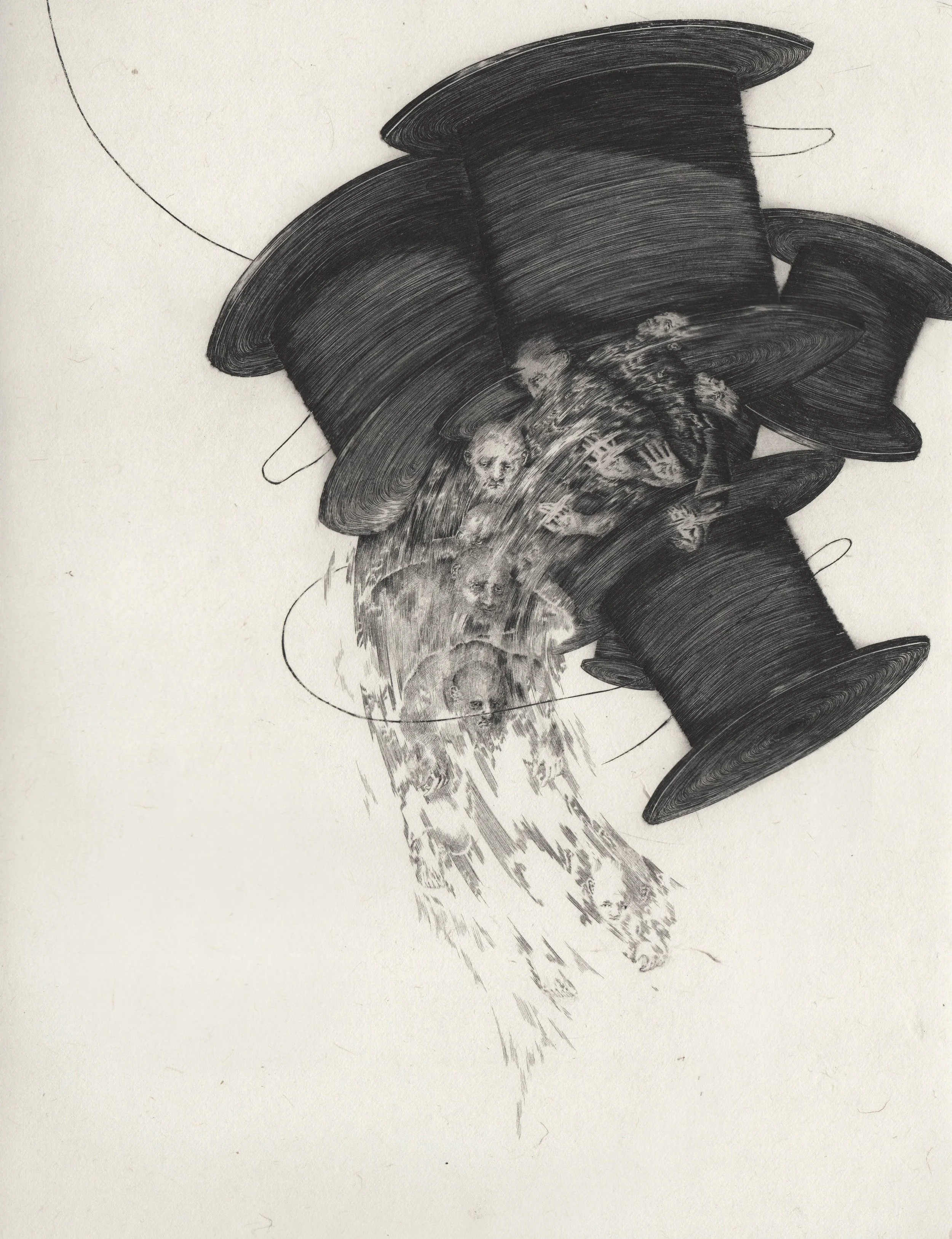
Engraving
Engraving is an intaglio printmaking process in which an image is incised directly into a metal plate using a tool known as a burin. The artist cuts into the surface at varying depths and angles, creating grooves that will hold the ink. Unlike processes that rely on chemical action, engraving is entirely manual, with the line formed through controlled pressure and physical incision.
Once the plate is engraved, ink is pushed into the recessed lines and the surface is carefully wiped clean. Dampened paper is placed on top and passed through a press under high pressure, drawing the ink out of the incisions and onto the sheet. The resulting image is defined by its clarity and precision.
Tone and shading are traditionally achieved through parallel lines or cross-hatching, with density and spacing determining the depth of shadow. The physical resistance of metal gives engraved lines a distinctive sharpness and permanence, while also making the process demanding and time-intensive.
Although later techniques offered more fluid approaches to mark-making, engraving remains valued for its discipline, control, and finely articulated line. The resulting prints are often characterised by crisp detail, structural clarity, and a refined surface quality.
-
The image is cut directly into a metal plate using a burin.
Ink is pressed into the incised lines.
The plate is wiped clean and printed under pressure.
-
Sharp, precise lines.
High clarity and fine detail.
Controlled, deliberate mark-making.
-
Plates are durable but may gradually wear.
Impressions remain consistent with careful printing.
Edition size is typically fixed by the artist.
-
Defined by edition size and condition.
Smaller editions circulate less widely.
Plates are often cancelled after printing.